
Why we invested in RadianX
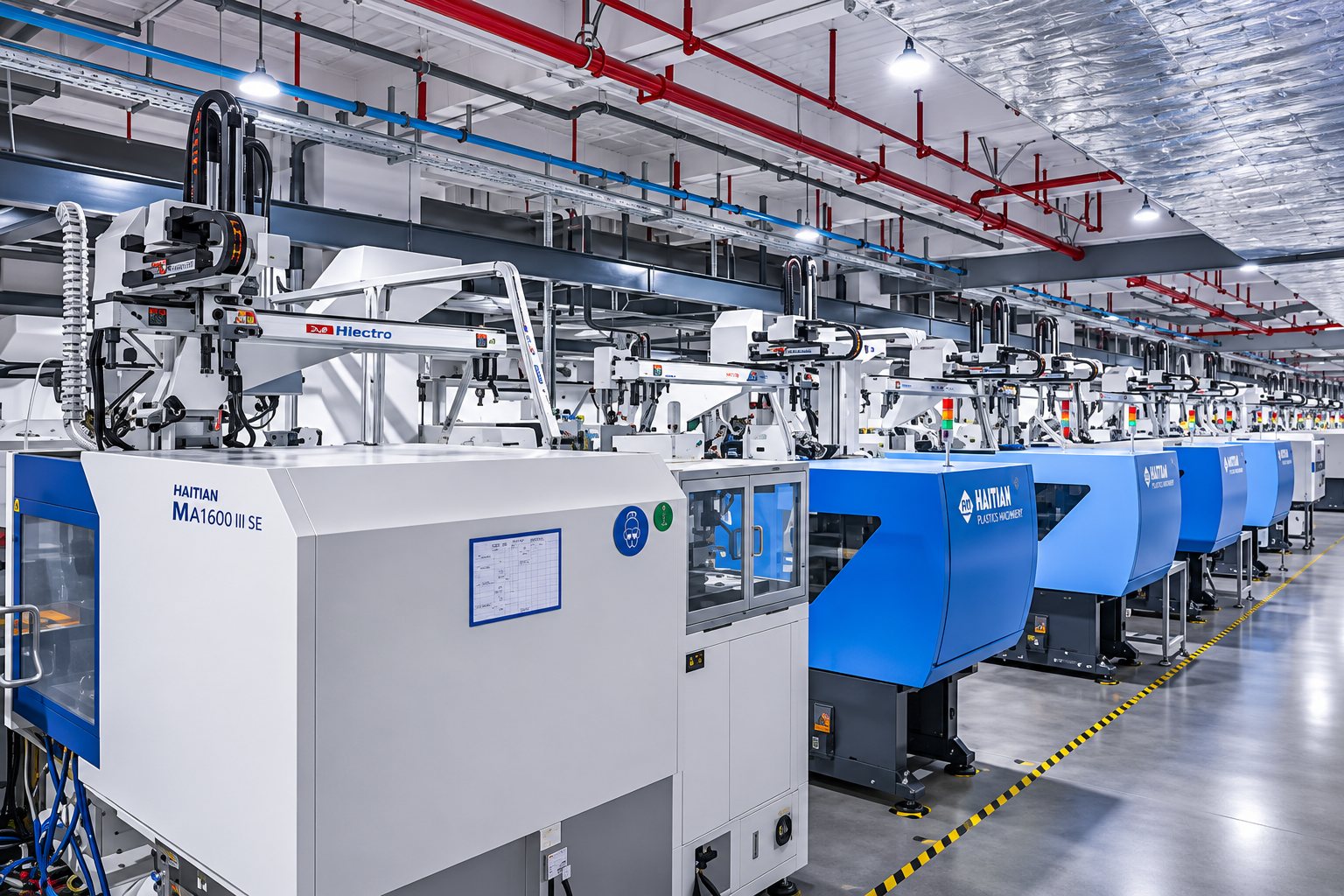
Solar has been one of the greatest cost curve stories of our lifetime. Silicon prices fell exponentially over two decades, and solar is now the world's fastest-growing energy source in a roughly $380 billion market. But silicon has real limits: it is heavy and rigid, performs poorly in shade or indoor light, and its supply chain runs overwhelmingly through China. Perovskite has long been seen as the next generation, addressing all these challenges. It’s made from readily available chemicals in the US and OECD, easy to manufacture, and works in the shade. Previously, durability and lead toxicity concerns slowed adoption and prevented the cost curve decline from starting, but those gaps are resolving quickly. And in some use cases, perovskite already wins today.
The robots, drones, IoT sensors, and autonomous devices moving out into the physical world do not live under ideal conditions. They are in warehouses, under tree cover, behind windows, in the shadow of buildings. They are weight-sensitive. And this physical AI market is poised to grow explosively in the coming years (from ~$100B today to ~$2T by 2035 per Globe Market Research), from general and industrial IoT to physical AI convergence to robotics – a perfect entry point to grow and scale.
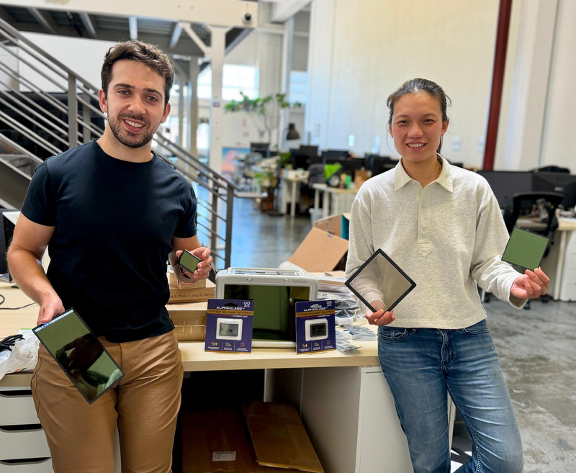
RadianX (formerly California Perovskite Technology Inc.) makes ultralight, flexible perovskite photovoltaic films that laminate onto glass, metal, plastic, or any curved surface, and harvest an order of magnitude more energy than silicon in mixed and indoor light conditions.
Most other perovskite players are focused on one layer of the stack: either the film chemistry, or the encapsulation, or the module. Most well-funded competitors are making a single capital-intensive bet, building utility-scale domestic manufacturing ahead of proven demand. RadianX is instead delivering full products and starting with a narrow focus on high value applications. They own everything from the absorber formulation through encapsulation to the custom power electronics that convert ambient light into usable power and sell working products rather than better film. The plan is to scale manufacturing carefully with experienced partners and build toward full vertical manufacturing integration over time. CEO Vivian Qu's core insight from her prior companies is that integration is what creates enduring value in materials businesses. We wholeheartedly agree.
This go-to-market has led to commercial traction. RadianX has been revenue-generating since 2024, with paid pilots across tablets, IoT, sensing, and buildings from leading global electronics players.
The team is what ultimately made us say yes. Serial deep-tech founder Vivian Qu and former Apple engineer Josh Douglas bring a relentless drive and the right mix of skills to scale this company patiently and successfully.
In short, Superlight has what appears on the surface a contrarian approach (a headquarters in a place no longer competitive for automaking, a technical approach discarded by the industry leaders, an entry point into a relatively small segment with strong, concentrated players, in an industry known for high capex and low margins brutally assaulted by China in the past decades) and yet we believe, looked at differently, it has the right product, in the right segment, at precisely the right time, led by the right team.
Superlight is an OEM (Original Equipment Manufacturer) of middle-mile electric trucks built on a completely clean-sheet design. It combines aerospace design principles and a software-centric digital architecture to transform middle-mile logistics, building vehicles for a future of electrification and self-driving. Its OV-1 truck carries 50% more pallets than same-class diesel and electric competitors, leading to over 50% lower cost per mile of cargo. This isn’t just theoretical – it’s proven with trucks on the road today.
We believe their de novo approach with proprietary spaceframe technology, an integrated and modern software stack well positioned for AI-ready manufacturing, and a product aligned with modern maintenance and a self-driving future, can win in a massive market with ample room for growth. Together with our friends at the Engine and 2150, we couldn’t be more thrilled to be part of the journey.
